
Uganda’s military justice system has undergone a major overhaul after President Yoweri Kaguta Museveni appointed a new chairperson and a completely reconstituted 10-member panel for the General Court Martial (GCM). The appointments, announced this week, mark one of the biggest shifts in the structure of the military judiciary in recent years and come at a time when the court is under intense national scrutiny.
Brig Gen Richard Tukachungurwa Takes Over Command
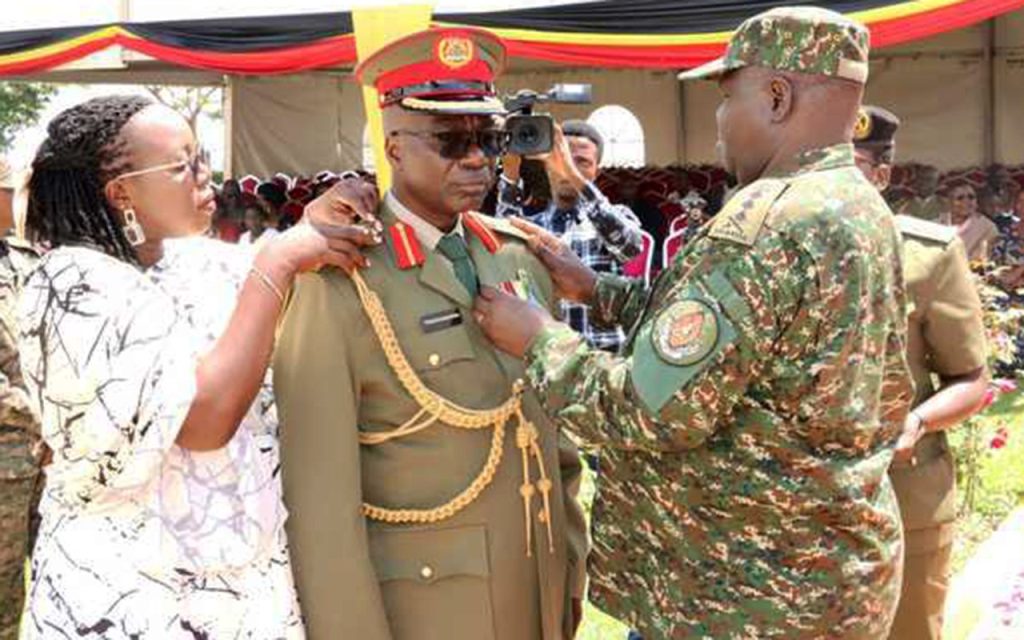
President Museveni appointed Brig Gen Richard Tukachungurwa as the new Chairman of the General Court Martial, replacing Robert Freeman Mugabe, whose term has come to an end.
Tukachungurwa, a seasoned military officer with a long career in the UPDF, now assumes leadership of one of the most powerful bodies in Uganda’s justice system — a court that has handled politically sensitive, high-profile and discipline-related cases for decades.
His tenure is expected to shape how the military judiciary functions in a post–Supreme Court ruling era, where legal boundaries and institutional authority are being reevaluated.
A Full 10-Member Bench Announced
Alongside Tukachungurwa, the President appointed a diverse panel of officers and legal experts to the GCM. The new team includes:
Simon Tusah Wankandya
Asha Patra
Fredrick Kangwamu
Raphael Mugisha
Lt Col Mohammedie Nasser Igambi
Maj Samuel Moses Amodoi
Maj Emmanuel Arihaihi
Maj Abubaker Nyombi
Maj Denis Chemtai
The appointments also extended to division-level military courts around the country, with David Drani Epalu named as Chairperson of the Fourth Division Court Martial and Yaqoub Hassan Mulyanti appointed to head the Special Forces Group Court Martial.
Appointments Follow Landmark Supreme Court Ruling
These sweeping changes come months after the January 31, 2025 Supreme Court ruling that declared the trial of civilians in military courts unconstitutional.
The ruling triggered extensive debate and brought many ongoing cases to a halt, forcing the government to reassess the legal foundation of military justice. In response, Parliament amended the UPDF Act, granting military courts limited power to try civilians under specified “exceptional circumstances.”
The restructuring of the GCM is widely viewed as a government effort to align the court’s operations with the amended law and restore functionality after months of legal uncertainty.
Mixed Reactions From Public and Legal Experts
While government officials have welcomed the changes, several human-rights and constitutional law advocates have raised concerns.
Critics argue that the amended law could undermine civilian judicial authority and potentially revive past abuses. Some have also questioned Brig Gen Tukachungurwa’s appointment, referencing earlier court incidents where defence lawyers were reportedly mistreated — allegations that the UPDF has historically denied.
Legal observers say the new panel will face the challenge of proving its impartiality and rebuilding public confidence in the military justice system.
A Justice System at a Turning Point
The reconstituted General Court Martial now stands at a historic crossroads. With a new chairman, a new panel, and a revised legal mandate, the court’s decisions in the coming months will likely shape Uganda’s military justice landscape for years to come.
As Brig Gen Tukachungurwa assumes the mantle, all eyes are on Makindye — waiting to see whether the new leadership will strengthen military discipline, uphold the rule of law, and restore trust in one of Uganda’s most powerful judicial bodies.
End