

By Gad Masereka
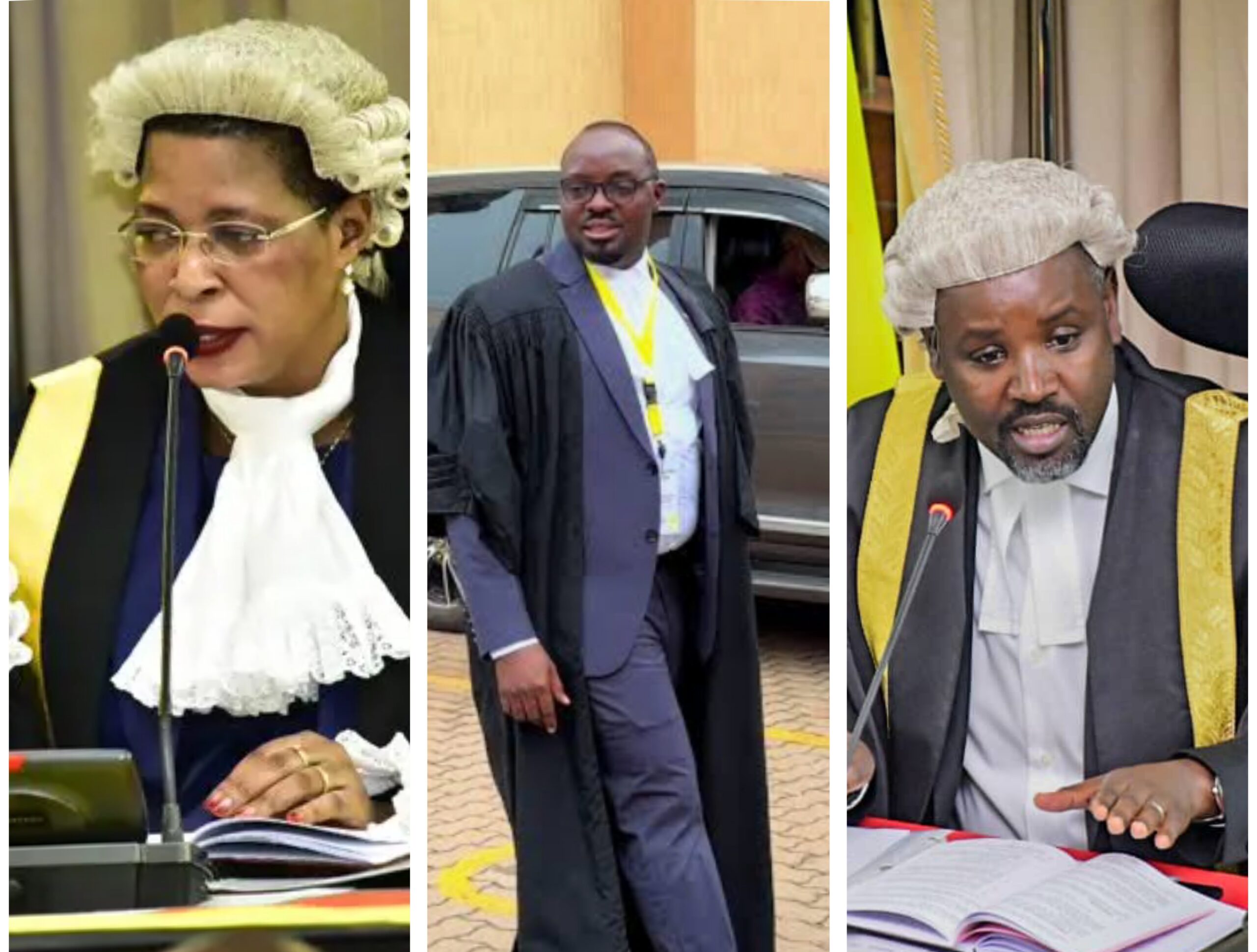
The High Court in Kampala has handed the ruling National Resistance Movement a significant legal victory, dismissing a politically charged petition that sought to overturn the party’s endorsement of Rt. Hon. Anita Annet Among and Rt. Hon. Thomas Tayebwa as its candidates for Speaker and Deputy Speaker of the 12th Parliament.
Justice Collins Acelam delivered the ruling on Monday, upholding preliminary objections raised by the respondents and dismissing the application filed by one Nsubuga Jack, alias Mandela, who had challenged the legality of the decision by the NRM Central Executive Committee to endorse the two parliamentary leadership candidates.
Central to the outcome was the legal defence mounted by Counsel Usaama Sebuufu of K&K Advocates, who argued throughout the proceedings that the party had acted fully within its constitutional framework when the CEC endorsed Among and Tayebwa at a meeting held at State House Entebbe on January 29, 2026.
“The Central Executive Committee acted within its mandate under the party constitution and established procedures. Internal political processes must be respected, and the court should be slow to interfere where mechanisms exist within the party,” Sebuufu submitted.
His arguments consistently centred on the principle that the dispute was fundamentally an internal political matter governed by party structures, and therefore not one warranting judicial intervention. Justice Acelam agreed, holding that the applicant had failed to exhaust the NRM’s internal dispute resolution mechanisms before approaching the court.
The judge further noted that judicial review is a remedy of last resort, and cautioned against court interference in internal political party affairs where clear institutional processes already exist to handle such disputes.
“The preliminary objections are accordingly upheld, and the application is hereby dismissed,” Justice Acelam ruled.
Although the court declined to award costs against the applicant, observing that the case raised broader constitutional and governance questions, the decision nonetheless represents a resounding courtroom win for the NRM legal team. The ruling clears the path for the party to proceed with its parliamentary leadership arrangements without further legal uncertainty hanging over the process.
Sebuufu’s final submissions had also carried a broader institutional argument, one that went beyond the individuals at the centre of the dispute.
“This is not merely about individuals, but about safeguarding the integrity of a party system that has clear rules, structures, and guiding regulations. The endorsement process was neither arbitrary nor unlawful,” he told the court.
Political and legal observers are already reading the ruling as a landmark affirmation of party autonomy, noting that it reinforces the authority of political organisations to manage their internal leadership affairs without unwarranted external interference. For the NRM, the decision strengthens institutional confidence ahead of the 12th Parliament and signals that the party’s internal structures retain the credibility and legal weight to withstand scrutiny in open court.